Dr. Pillai’s Ashtaang · Patient information
Patra Pinda Sweda: warm herbal-leaf treatment
Patra Pinda Sweda uses warm cloth bundles containing prepared medicinal leaves to apply heat to the body. Also called Ela Kizhi or Ilakkizhi, it belongs to the Ayurvedic family of swedana treatments. At Dr. Pillai’s Ashtaang in Ambernath, the physician selects the materials and treatment plan after understanding your symptoms and health. [A1]
Plan a consultation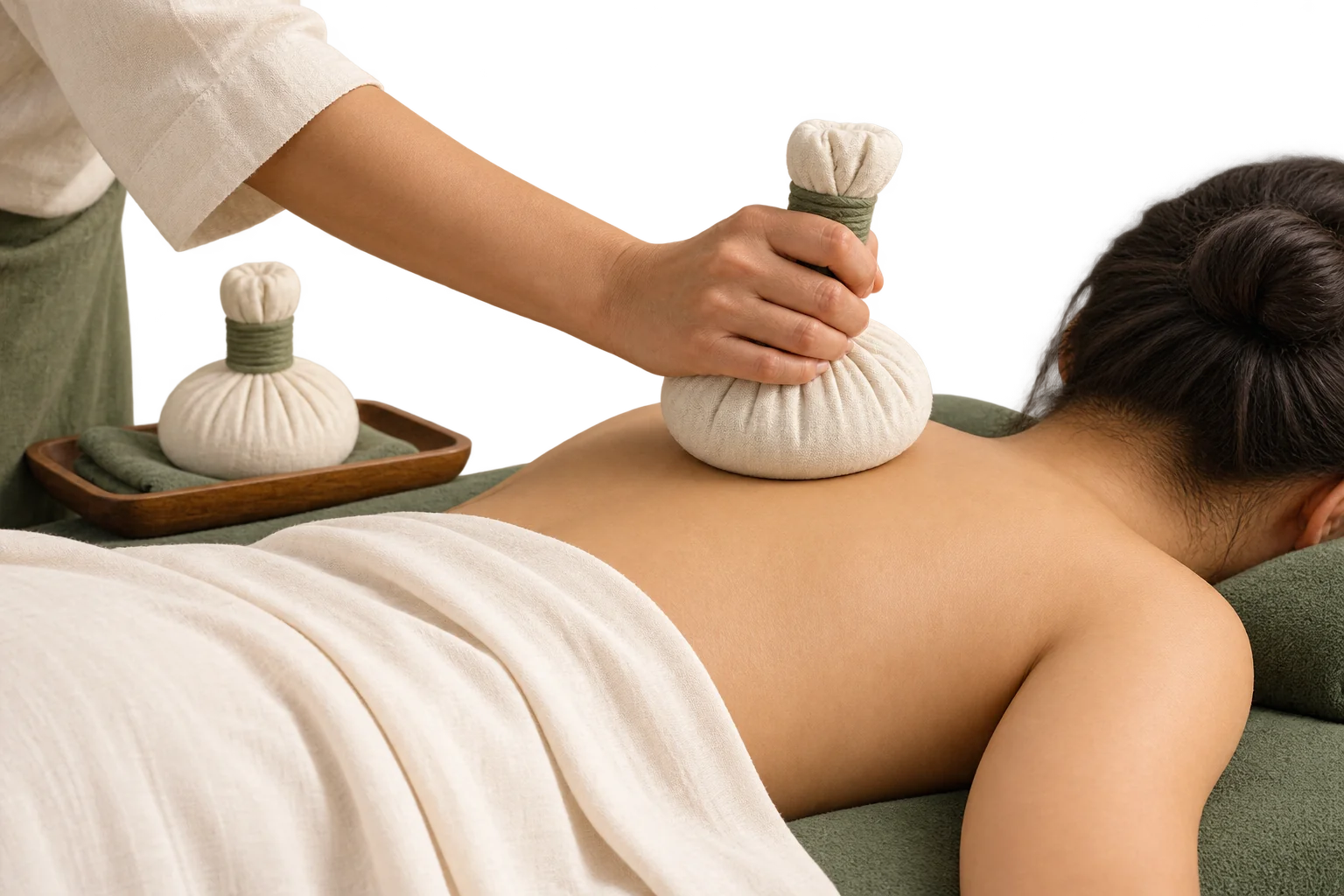
Why leaves, oil and warmth are used
In Ayurveda, swedana is traditionally used to address stiffness, heaviness and a sense of coldness in selected conditions. The form and intensity of treatment depend on the person and the clinical pattern, including Vata and Kapha involvement. Patra Pinda Sweda combines this use of warmth with prepared leaves held in cloth boluses. [P1]
Joint or muscle discomfort that makes everyday movement difficult can be a reason to discuss this treatment. The physician considers the cause, the stage of the condition and whether warmth is appropriate. A painful or swollen area does not automatically call for the same therapy as a stiff, long-standing complaint.
What a session involves
At Ashtaang, Patra Pinda Sweda usually follows a light oil massage. Prepared leaf bundles are applied to the body, with warmth maintained during the session. Treatment positions and the areas addressed follow the physician’s plan. Tell the team if a position is difficult or if the application feels too hot or uncomfortable.
The leaves and other materials are selected for your case; the name of the procedure does not mean that every patient receives an identical mixture. This is a supervised clinical procedure, rather than a herbal compress to prepare and apply at home.
Duration and planning your visits
The treatment itself usually takes about 30–45 minutes. A course may be planned over 7–14 days, depending on your needs and response. These are indicative ranges, not fixed packages. Check the full appointment time with reception, especially if your plan includes consultation or another procedure.
Ashtaang provides outpatient treatment without overnight admission or accommodation. If repeated visits are advised, discuss a workable schedule and any travel or work concerns before starting.
Before treatment
Bring your current prescription, medicines list and relevant reports. Let the physician know about allergies, skin irritation, reduced skin sensation, pregnancy, recent injury or surgery, fever, or difficulty tolerating heat. This information helps decide whether treatment should proceed or be adjusted. Ask for your individual instructions about meals, clothing and preparation.
During the session, report burning, dizziness or feeling unwell promptly. More heat is not the goal: the application should remain appropriate to your comfort and clinical needs. [P1]
Aftercare and follow-up
Before leaving, clarify advice about bathing, rest, activity and the next visit. The physician may combine procedures with medicines, diet and lifestyle guidance as part of your care. At follow-up, describe changes in daily tasks—such as turning, walking or reaching—as well as any change in discomfort. Bring your previous written prescription.
If you develop persistent irritation or feel worse after treatment, seek advice before the next session. Do not assume that increasing pain or burning is a necessary sign of progress.
Traditional use and research
Patra Pinda Sweda has a place in Ayurvedic care for selected musculoskeletal complaints. A 2011 osteoarthritis study compared leaf-bolus treatment plus an oral formulation with the oral formulation alone. Both groups improved, but the paper’s abstract and conclusion give conflicting accounts of which group did better overall. This inconsistency prevents a dependable conclusion about the added benefit of the procedure. The study does not demonstrate repair of joint damage. [P2]
Your treatment goals and response therefore need individual review. We do not promise reversal of arthritis, restoration of damaged nerves or a particular degree of pain relief.
Questions patients ask
Is Patra Pinda Sweda the same as Abhyanga?
No. Abhyanga uses medicated oil massage. Patra Pinda Sweda applies warm leaf-filled bundles; light oil massage may be part of its preparation.
How is it different from other Pinda Sweda treatments?
The contents of the bolus distinguish the procedures. Patra uses medicinal leaves, while other forms use materials such as powders or prepared rice. Your physician chooses the form suited to your case.
Do I need to sweat heavily?
Heavy sweating is not a target to pursue. Swedana is selected and adjusted according to the person and the condition; tell the team about discomfort rather than trying to tolerate more heat. [P1]
Can I choose this instead of my current treatment?
Bring details of your current care to the consultation. The physician will discuss how the proposed procedure fits your overall plan and whether other assessment or treatment is needed.
Arrange a consultation
Call or WhatsApp reception on +91 95521 28485 during working hours to arrange a consultation at Dr. Pillai’s Ashtaang. Appointments are preferred. The consultation is the starting point for deciding whether Patra Pinda Sweda fits your needs.
Further reading
References
- [A1] Department of AYUSH. Ayurveda: The Science of Life (2012), chapter 5, pp.59–60. Read source
- [P1] Charak Samhita online. Swedadhyaya, Sutrasthana 14. Read source
- [P2] Joshi A et al. Clinical effect of Nirgundi Patra pinda sweda and Ashwagandhadi Guggulu Yoga in Sandhigata Vata. AYU. 2011;32(2):207–212. Read source