Dr. Pillai’s Ashtaang · Patient information
Shirodhara: Taila and Takra care at Ashtaang
Shirodhara is a therapy in which a steady stream of a prescribed liquid is directed over the forehead. At Ashtaang, we offer Taila Dhara with medicated oil and Takra Dhara with medicated buttermilk. The material, session and course are chosen by the physician as part of your treatment plan.
Plan a consultation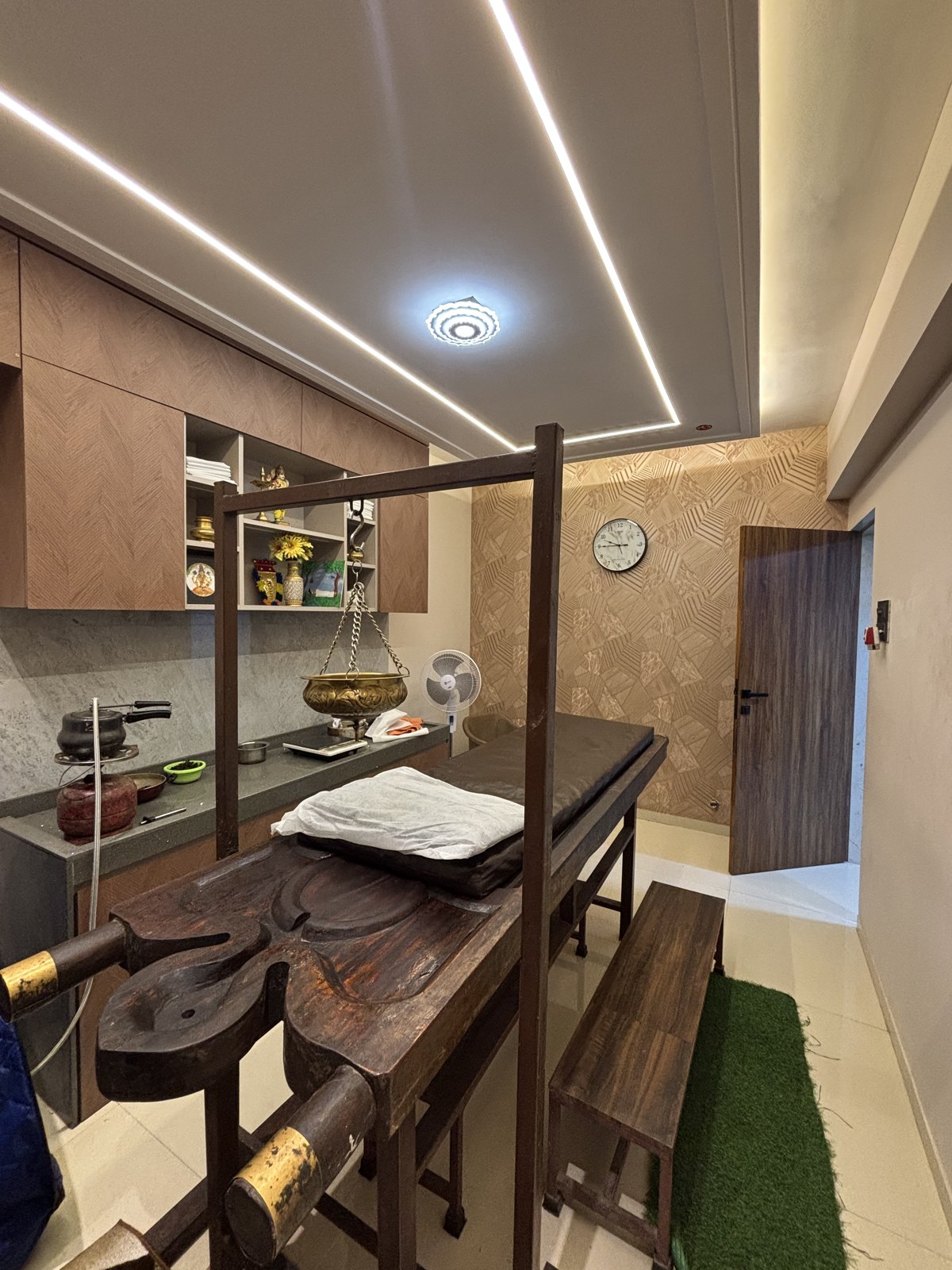
Why the choice of liquid matters
Taila Dhara
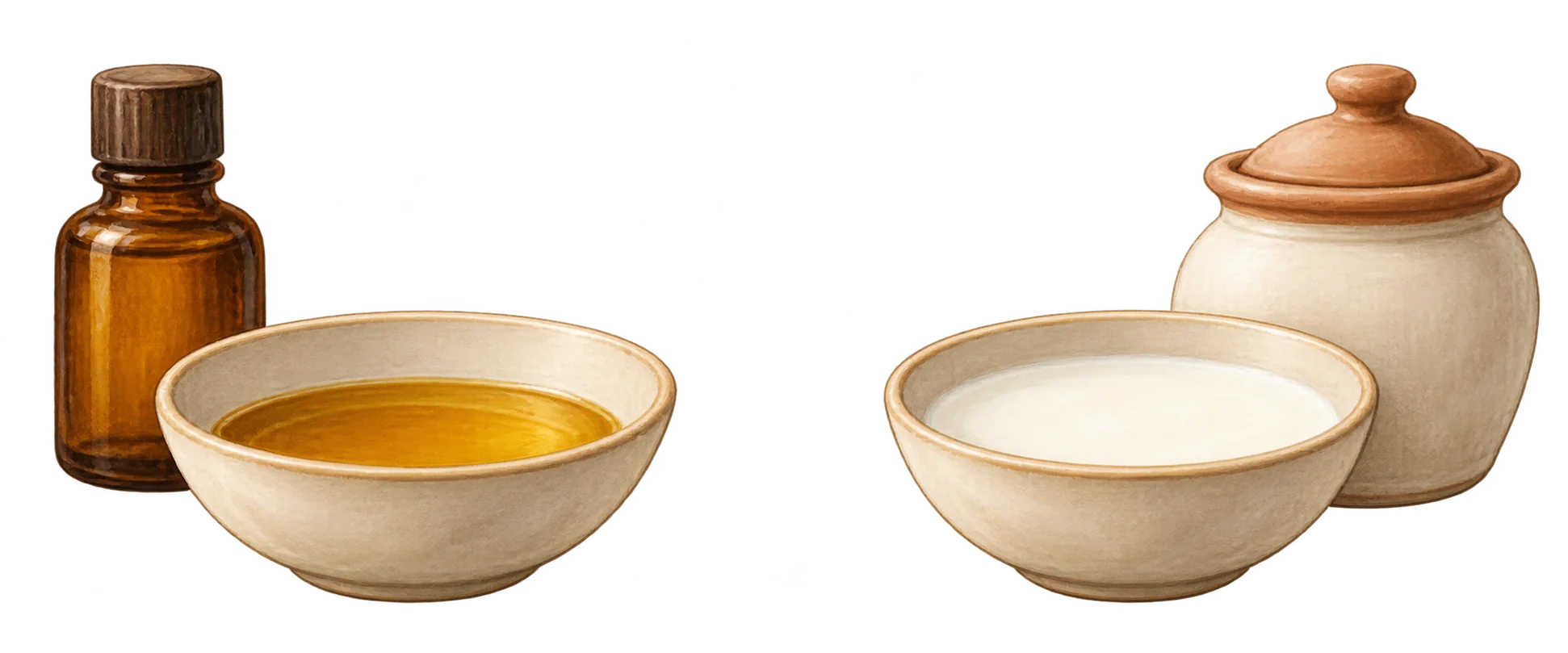
Taila means oil. In this form, medicated oil is poured over the forehead with the flow, height and temperature controlled for the procedure. It is an external treatment; the oil is not taken by mouth during Shirodhara.
Takra Dhara
Takra is buttermilk. This form uses a medicated buttermilk preparation rather than oil. Although the overall pouring method is similar, the material has a different place in Ayurvedic treatment selection.
At consultation, the doctor explains which form is relevant to you. The choice is based on your clinical needs rather than treating the two liquids as interchangeable options.
When it may be considered
In our Kerala Ayurveda practice, Shirodhara may be considered within an individual plan for concerns such as stress and headache. Sleep difficulty also deserves a full discussion of symptoms, routines and existing treatment before a procedure is selected.
Takradhara has a place in Ayurvedic care of selected skin presentations. Government Ayurvedic treatment guidance includes it within broader plans for psoriasis and some forms of dermatitis. This describes a role in a clinical plan, not a claim that a forehead treatment alone cures a skin condition. [S1]
The consultation helps establish the purpose of care and what changes will be reviewed. Not every patient needs a procedure; advice, medicines and lifestyle guidance may be sufficient in some cases.
What happens during a visit?
Assessment → preparation → Shirodhara → aftercare.
We begin with the physician’s assessment and selection of the liquid. Preparatory head massage may form part of the plan. During Shirodhara, you rest while the prescribed liquid is poured over the forehead in a controlled rhythm. The procedure is carried out under doctor supervision.
Tell the clinician if the position or temperature feels uncomfortable. There is no need to endure discomfort to obtain a better result. Ask any questions about the materials before starting, particularly if you have reacted to a product previously.
Session length and course
A Shirodhara session is indicatively 30–45 minutes. Allow additional time for any preparation and aftercare; this is not a guaranteed total appointment length.
Taila Dhara may be planned over three, seven or fourteen days. Takra Dhara may be planned over three, five, seven or fourteen days. These are indicative course patterns, not a fixed prescription or a requirement to complete the longest course. Your physician confirms the number and sequence of visits and adjusts the plan to your needs.
Ashtaang offers outpatient treatment without accommodation or overnight admission. Confirm attendance dates, rest and travel arrangements before scheduling a course.
Preparation and aftercare
Bring your reports, prescriptions and a current medicine list. Tell the physician about skin irritation or wounds around the head, product allergies, a new illness or difficulty lying comfortably for the session. Suitability is decided after assessment.
Follow the instructions given for your treatment, including cleaning or washing your hair, rest and return to usual activities. These details depend on the liquid and the individual plan. If you notice irritation or feel unwell, tell the clinician rather than repeating a session without review.
Any change to existing medicines should follow a case review. Shirodhara is not a reason to independently stop sleep, mental-health or other prescribed treatment.
What research can tell us
A small randomized crossover study compared sesame-oil Shirodhara with warm-water Shirodhara in people reporting poor sleep. Fifteen of twenty participants completed it. The oil treatment improved a self-reported sleep score at the early follow-up, but there was no demonstrated benefit on objective sleep measurements or daytime sleepiness. [S2]
This is an encouraging but preliminary finding. It does not establish that every Shirodhara preparation treats insomnia, and it cannot be applied directly to Takra Dhara. Our discussion begins with your symptoms and the purpose of the proposed care, without promising a particular result.
Questions patients often ask
Is Shirodhara a head massage?
It is a pouring treatment over the forehead. Head massage is a different therapy, although it may be used in preparation.
Is Takra Dhara simply a different oil?
No. It uses medicated buttermilk. The physician selects the material according to the treatment plan.
Will I definitely sleep during the session?
Sleep is not a requirement or a measure of success. Your response is individual.
Can Shirodhara replace my existing treatment?
That decision requires assessment. Do not change prescribed medicines because you have booked a therapy.
How is Shirodhara different from Shirovasti?
Shirodhara uses a flowing stream. Shirovasti retains prescribed oil over the head using a retaining arrangement. They are separate procedures.
Talk to us about the right plan
To arrange a consultation at Dr. Pillai’s Ashtaang in Ambernath, contact reception on +91 95521 28485 during working hours by phone or WhatsApp. Appointments are preferred; the physician confirms the procedure and course after assessment.
Further reading
References
- [S1] Ayush Vertical, Directorate General of Health Services. Standard Treatment Guidelines on Management of Dermatological Disorders in Ayurveda System of Medicine. 2026. Selected Takradhara sections, printed pp. 17–18, 80–81. Read source
- [S2] Tokinobu A., Yorifuji T., Tsuda T., Doi H. Effects of Ayurvedic Oil-Dripping Treatment with Sesame Oil vs. with Warm Water on Sleep: A Randomized Single-Blinded Crossover Pilot Study. J Altern Complement Med. 2016;22(1):52–58. DOI: 10.1089/acm.2015.0018. Read source