Dr. Pillai’s Ashtaang · Patient information
Basti: understanding Niruha and Anuvasana
Basti, also written Vasti, is an Ayurvedic procedure in which prescribed preparations are administered through the rectal route. At Ashtaang, this includes Niruha or Kashaya Basti and Anuvasana Basti. The physician selects the form and course after assessing your condition.
Plan a consultation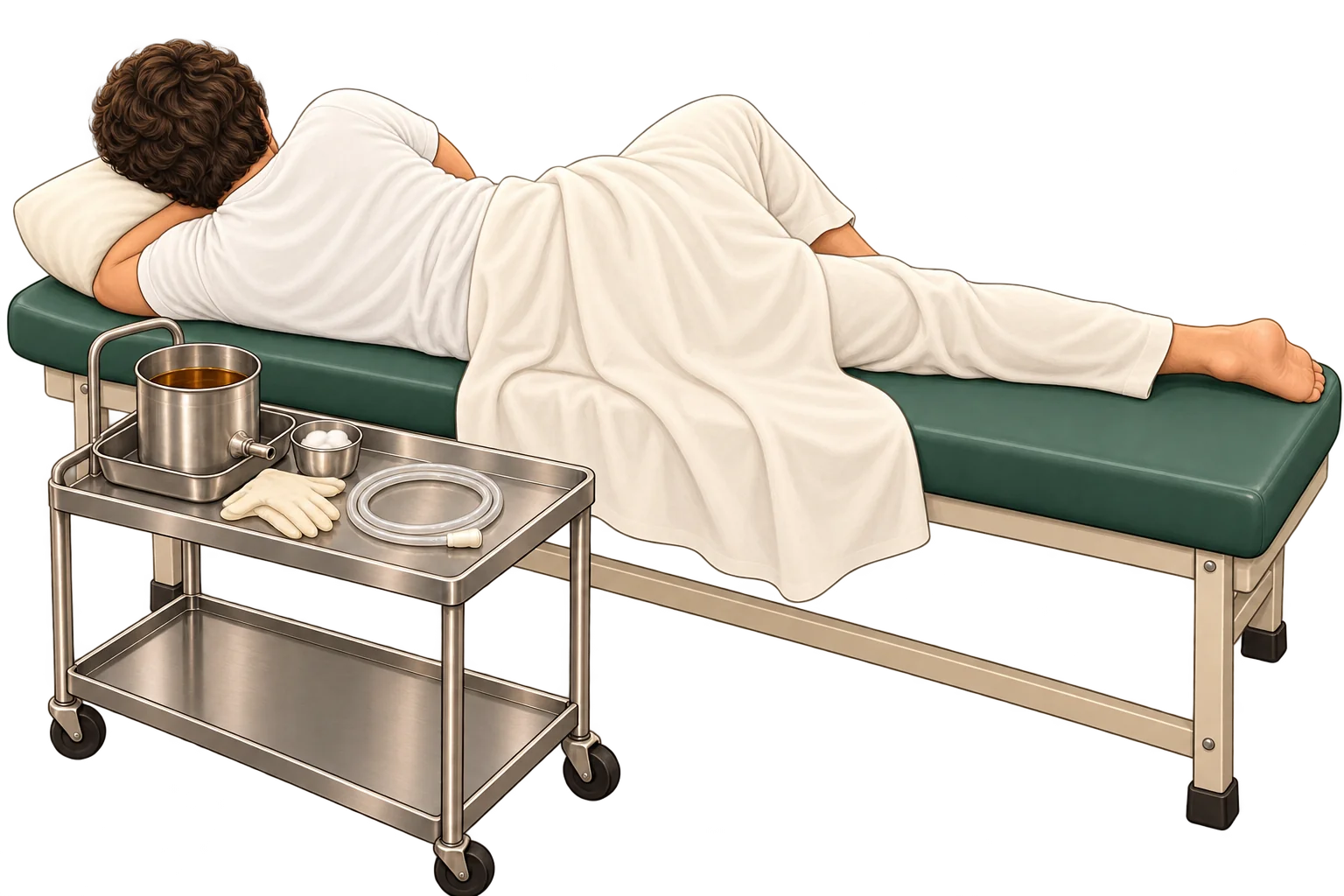
Why Ayurveda uses Basti
Basti has a central role in classical management of Vata-related disorders. Niruha is also called Asthapana or Kashaya Basti. [S3] Classical discussion includes Vata-related pain and stiffness and selected disturbances of bowel function. These traditional indications require clinical interpretation, rather than choosing a procedure from a symptom list. [S4]
Your consultation considers the concern itself, your health history and the treatment you have already received. A treatment plan may use Basti alongside other care, but it is not automatically required for everyone attending the clinic.
Two forms, selected for different needs
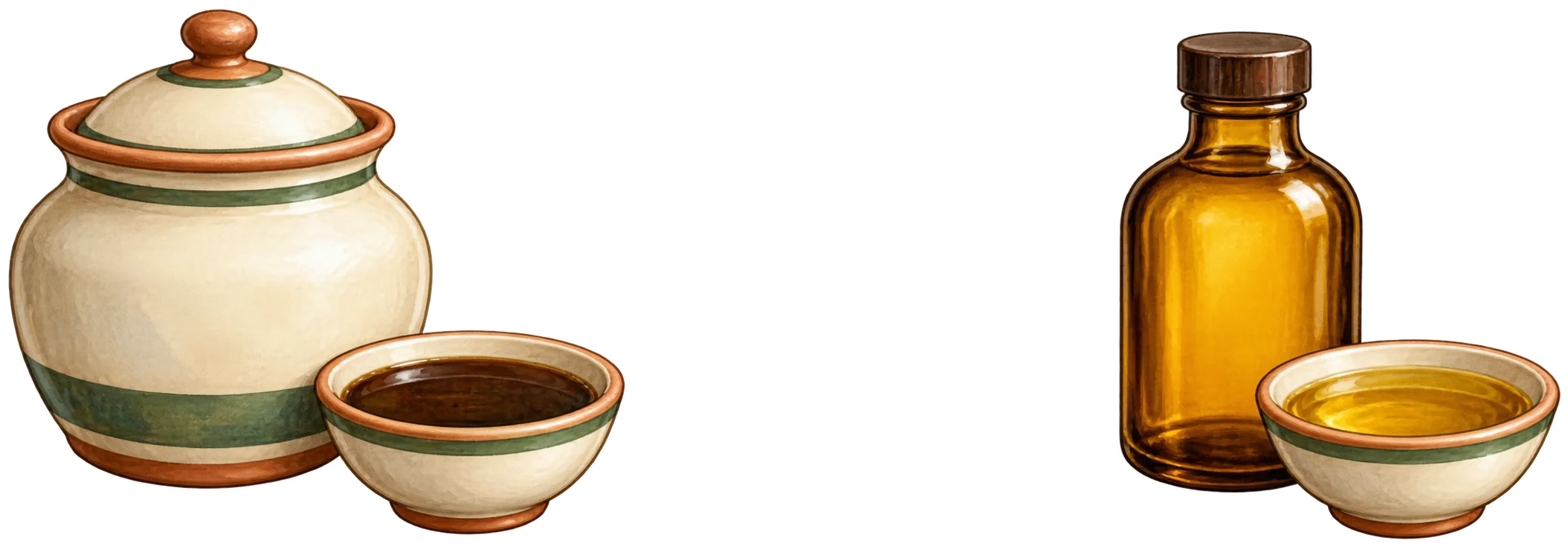
Niruha / Kashaya Basti
This is a decoction-based preparation. At Ashtaang, its ingredients and strength are selected according to the condition being treated and the individual assessment. It should not be understood as a standard formula that is identical for every patient.
Anuvasana Basti
This form uses prescribed medicated oil. In Ayurvedic practice it has an unctuous, nourishing role. At Ashtaang, preparation may include lower-abdominal massage. The choice of oil and the treatment plan belong to the physician’s assessment.
The two forms can have different purposes and instructions. Do not swap one for the other or assume that a recommendation given to another patient applies to you.
What to expect at Ashtaang
Assessment → selected preparation → supervised administration → observation and aftercare.
The consultation comes first. Your physician explains which form is proposed and how it fits the overall plan. Bring any questions about the procedure before agreeing to treatment.
Preparation, the medicines used and the sequence are individualized. Administration takes place as part of physician-supervised care. Tell the clinician about discomfort or concerns so that your response can be assessed. Instructions for meals, observation and the period after treatment should be clear before you leave.
How long does a course take?
The number of visits and the course depend on the chosen form and your treatment plan. Confirm both the appointment time and the time needed for observation rather than assuming administration is the whole visit. There is no single published course length that applies to all our patients.
Ashtaang is an outpatient clinic without overnight accommodation. Discuss work, travel and any practical support you may need when arranging the course. If your schedule changes, contact reception before altering the planned sequence yourself.
Preparation, comfort and safety
Bring your medicine list and tell the physician about new illness, pregnancy, bowel symptoms, bleeding, recent surgery or a previous difficulty with a similar procedure. These details help determine whether treatment should proceed and what further assessment is needed.
Classical texts distinguish nourishing from cleansing forms and caution against depleting treatment in a markedly weakened or dehydrated person. [S4] The fact that Basti is a traditional treatment does not remove the need for appropriate selection and care.
Follow your individual aftercare instructions. Report significant pain, bleeding, faintness or ongoing unexpected bowel symptoms promptly. Severe or rapidly worsening symptoms require urgent medical assessment. Do not purchase an enema kit or prepare medicinal mixtures to reproduce this treatment at home.
Basti is different from Kati or Janu Basti
The shared name can be confusing. This page describes rectally administered medicinal Basti. Kati Basti and Janu Basti are external oil-retention procedures over the lower back and knee respectively. They are different procedures with different assessments and preparation.
Traditional purpose and evidence
The Ayurvedic explanation of Basti informs how a physician selects treatment. It does not establish that every formulation has the same effect, or that a procedure will reliably improve every condition associated with Vata.
We discuss the intended purpose in your case, agree what to follow during treatment and review your response. Classical knowledge guides this conversation; it is not a promise of a particular outcome.
Questions patients often ask
Is Basti only used for constipation?
No. Its classical use is broader, but the appropriate form depends on assessment. A bowel symptom is not a reason to select a medicinal enema independently.
Is Anuvasana the same as Niruha?
No. One is oil-based and the other decoction-based. The clinician chooses the preparation and sequence for the treatment aim.
How long should the medicine remain inside?
Follow the instructions for the exact preparation selected. A generic time from the internet is not a personal treatment target.
Can I book Kati Basti when I have been advised Basti?
Clarify the name with the clinician or reception. Rectal Basti and external oil-retention procedures are not interchangeable.
Discuss Basti in consultation
To arrange an assessment, phone or WhatsApp reception on +91 95521 28485 during working hours. Appointments are preferred. Reception can help with scheduling; clinical questions are addressed through consultation.
Further reading
References
- [S3] Adarsh P. M. and Deole Y. S. Asthapana basti. Charak Samhita Research, Training and Development Centre, I.T.R.A., Jamnagar. DOI 10.47468/CSNE.2023.e01.s09.145. Definition and classical Vata rationale. Read source
- [S4] Bhatted S. and Bhojani M., translators/commentators. Basti Siddhi, Charaka Samhita, Siddhi Sthana chapter 10. Online edition, 2020. DOI 10.47468/CSNE.2020.e01.s08.011. Verses 4–12: individualized selection, types, traditional indications and cautions. Read source