Dr. Pillai’s Ashtaang · Patient information
Vamana: a patient guide
Vamana is a Panchakarma procedure in which prescribed medicine induces vomiting under physician supervision. At Dr. Pillai’s Ashtaang in Ambernath, it begins with a consultation and a planned period of preparation. The treatment day is one part of the course; recovery and dietary guidance matter too.
Plan a consultation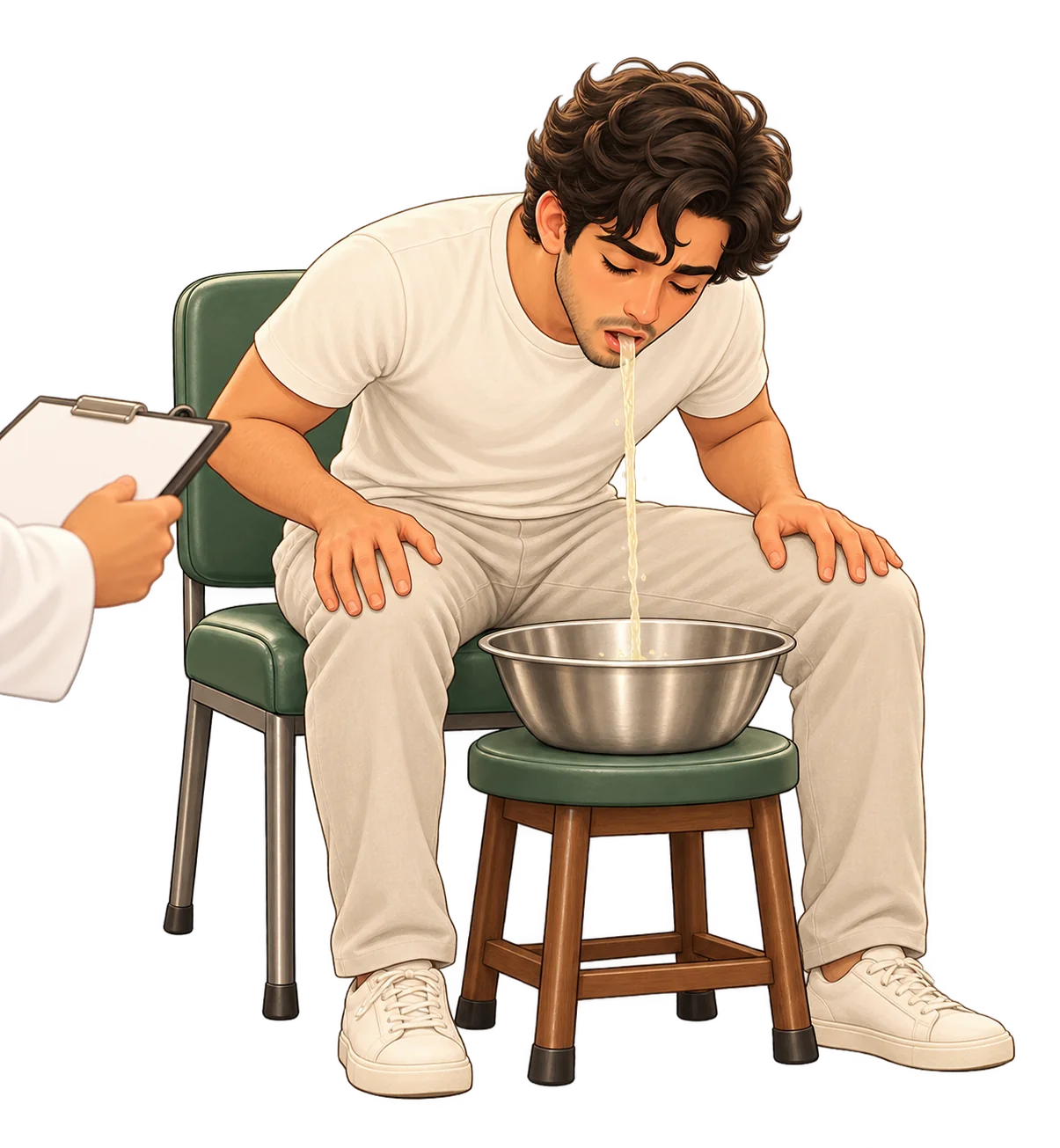
When Vamana may be considered
In Ayurveda, Vamana is principally associated with aggravated Kapha, sometimes with an accompanying Pitta disturbance. Classical discussion includes selected Kapha-dominant presentations of skin disorders and disturbed appetite. These are Ayurvedic indications, rather than a recommendation that everyone with a particular symptom should undergo Vamana. [S1]
At your consultation, we discuss what has brought you to the clinic, your previous treatment and your present health. A procedure is recommended only when it fits the individual treatment plan. Your care may instead centre on medicines, diet, lifestyle advice or another approach.
Your treatment journey at Ashtaang
Assessment → preparation → supervised Vamana → aftercare.
Preparation includes prescribed medicines, massage and steam according to your plan. Allow approximately 10–12 days for this preparatory phase; the physician decides when you are ready to proceed. Do not begin a preparation routine independently or use someone else’s prescription.
On the treatment day, the prescribed medicine is given to bring about vomiting. Your response is observed under physician supervision. The treatment is assessed by the clinician, rather than by asking you to achieve a particular number of vomiting episodes. After the main procedure, the plan moves to rest, dietary guidance and review.

Planning your visits and recovery
The indicative preparation period is separate from the main procedure and the aftercare period. Dietary aftercare is commonly planned for about five days, with adjustments to your response. These timings help you plan, but are not a fixed package or a promise that every course will follow the same calendar.
Ashtaang provides outpatient care without overnight accommodation. Discuss work, travel and any need for a companion before agreeing your dates. Confirm the treatment-day arrival time and expected observation period with the clinic; these are not the same as a routine consultation appointment.
Preparation and suitability
Bring your reports and a list of all medicines and supplements you take. Tell the physician about pregnancy, heart problems, recent illness or pronounced weakness. Classical guidance gives particular attention to a person’s strength and identifies circumstances in which Vamana should be avoided. [S1]
Any change to existing medicines is decided after reviewing your case. Ask for your own instructions on meals, fluids and preparation before treatment rather than following a generic online cleansing routine.
Aftercare and signs to report
Follow the diet and rest advice provided for you, including how to return to usual meals. Report marked weakness, faintness, bleeding or symptoms that continue beyond the course explained by the clinician promptly. Classical descriptions recognize excessive emesis and its complications; supervision and aftercare are integral to the procedure. [S1]
For severe or rapidly worsening symptoms, seek urgent medical care. Ashtaang is an outpatient clinic and does not provide an emergency service.
Benefits and responsible expectations
Vamana has a defined place in classical Ayurvedic treatment. Its traditional rationale should be understood in that framework, without equating dosha with a laboratory-measured toxin. A classical indication is not, by itself, proof of a predictable clinical outcome.
We discuss the purpose of treatment in relation to your case and review how you respond. Vamana is not offered as a guaranteed cure or as a substitute for necessary medical assessment.
Questions patients often ask
Is Vamana the same as ordinary vomiting?
No. This is a planned treatment using prescribed medicine, preparation and clinical supervision. Unexpected or persistent vomiting outside that plan requires assessment.
Can I book Vamana directly?
Start with a consultation. Availability does not mean the procedure is suitable for every patient.
How long should I allow?
Preparation is indicatively 10–12 days and dietary aftercare about five days. The main treatment and observation time are confirmed individually; do not treat these figures as a fixed total course.
Is it something I can try at home?
No. Do not induce vomiting or take emetic medicines yourself.
Arrange a consultation
To discuss whether Vamana belongs in your care plan, contact reception on +91 95521 28485 during working hours. Appointments are preferred. Phone and WhatsApp are for consultation enquiries; medical advice is given through clinical assessment.
Further reading
References
- [S1] Aneesh E. G. and Deole Y. S. Therapeutic emesis (Vamana). Charak Samhita Research, Training and Development Centre, ITRA. DOI 10.47468/CSNE.2020.e01.s09.032. Sections: Indications, Precautions, Contraindications, Post-therapeutic measures, Features of excessive emesis. Read source