Dr. Pillai’s Ashtaang · Patient information
Ayurvedic head therapies
Head therapies at Dr. Pillai’s Ashtaang use oil application, massage or selected herbal pastes as part of an individual Ayurvedic care plan. The methods differ in how the material is applied and how long it remains in contact with the scalp. Your consultation helps us choose an appropriate approach and explain how it fits with the rest of your care.
At our Kerala Ayurveda & Panchakarma Clinic in Ambernath, these are outpatient procedures. You return home after your visit; a planned course may involve several appointments. You do not need every therapy, and a head treatment does not automatically mean you need a full Panchakarma course.
Plan a consultationHow Ayurveda approaches treatment of the head
Ayurvedic assessment considers the pattern of symptoms, the person’s constitution and present condition, and how they respond to different forms of care. Oil-based head procedures belong to the traditional approach called moordha taila. Massage, a retained oil pad and a reservoir of oil offer different ways of applying it; a herbal paste is a different preparation and is selected accordingly.
In Ayurvedic practice, selected head treatments may form part of care for disturbed sleep, stress-related concerns or scalp symptoms. Their role depends on the assessment rather than the symptom name alone. We discuss what we are trying to address, the treatment options and how we will review your response.
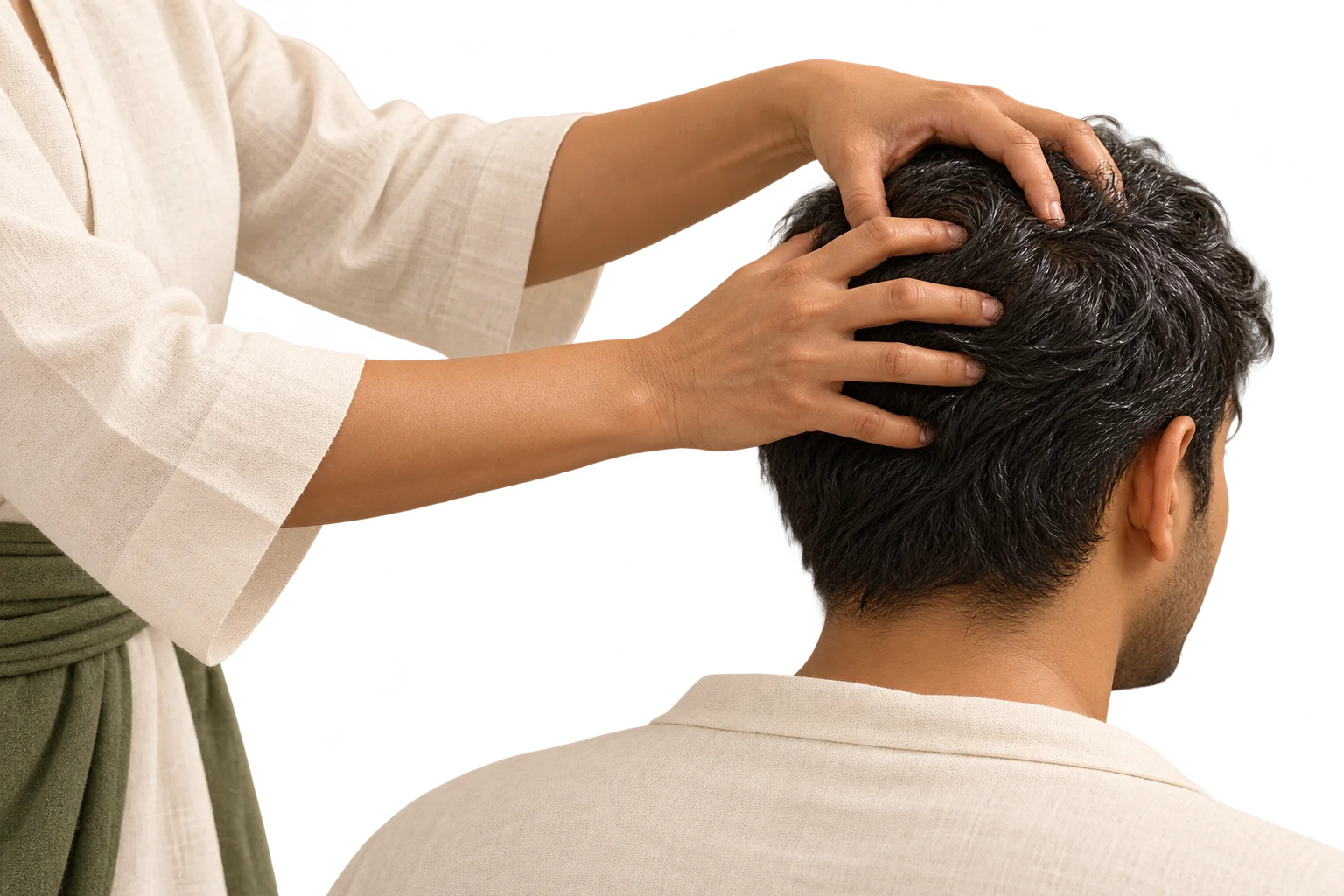
Shiro Abhyanga — head oil massage
Shiro Abhyanga is the application of a selected oil to the scalp with massage. It involves movement and touch, unlike a pad or paste that stays in place. The oil and manner of application are chosen for the individual.
At Ashtaang, head massage may be recommended on its own or used as preparation before Shirodhara, Shirovasti, Thalapothichil or another head therapy. This preparatory role does not make it a compulsory first step for every patient. We explain the sequence prescribed for you.
If you are seeking care for scalp dryness, discomfort or disturbed sleep, consultation helps establish whether oil application is suitable and what else needs attention. Let us know if previous head oiling has caused irritation or made your symptoms worse. The appointment length is confirmed when your treatment is arranged.
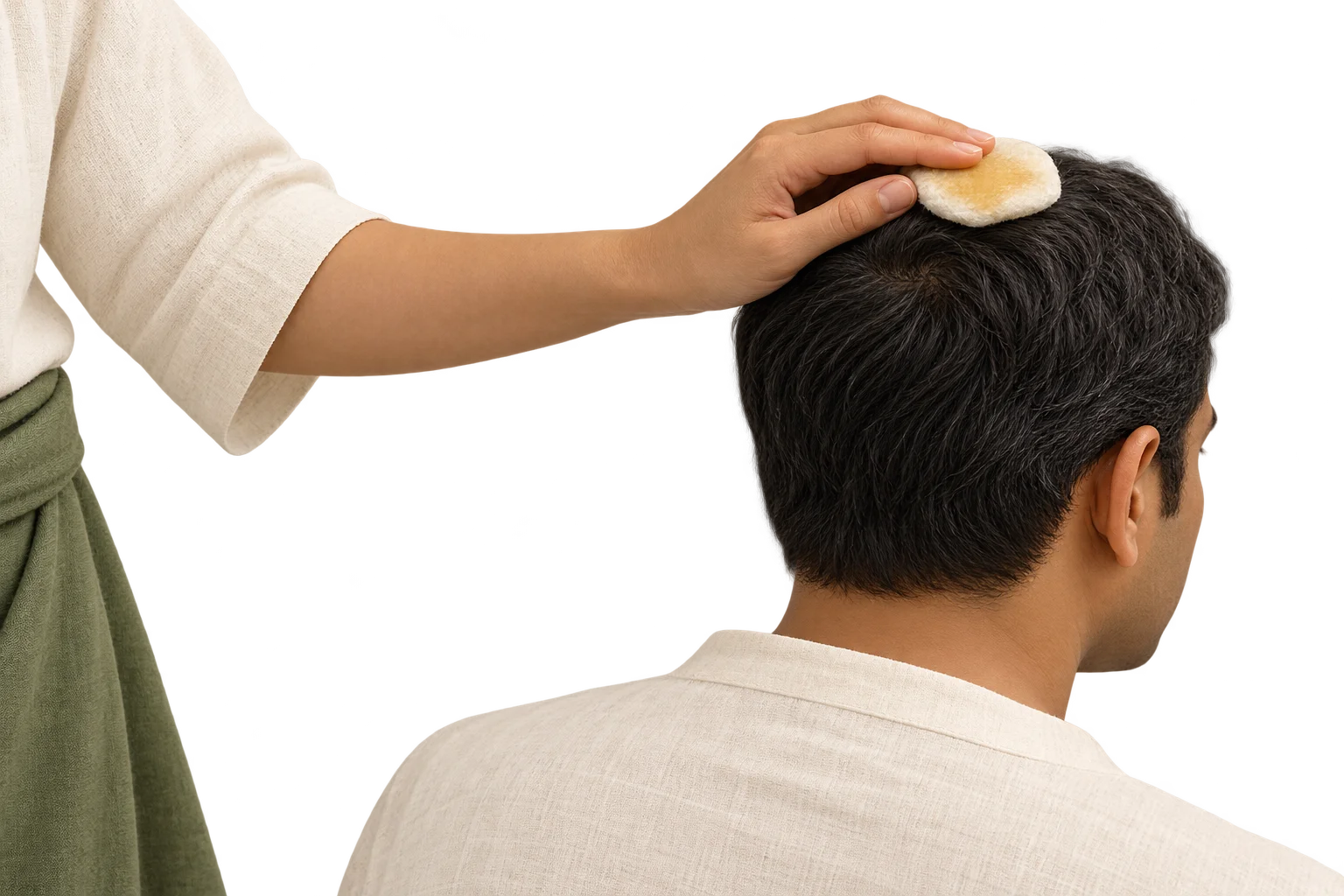
Shiro Pichu — a retained oil pad
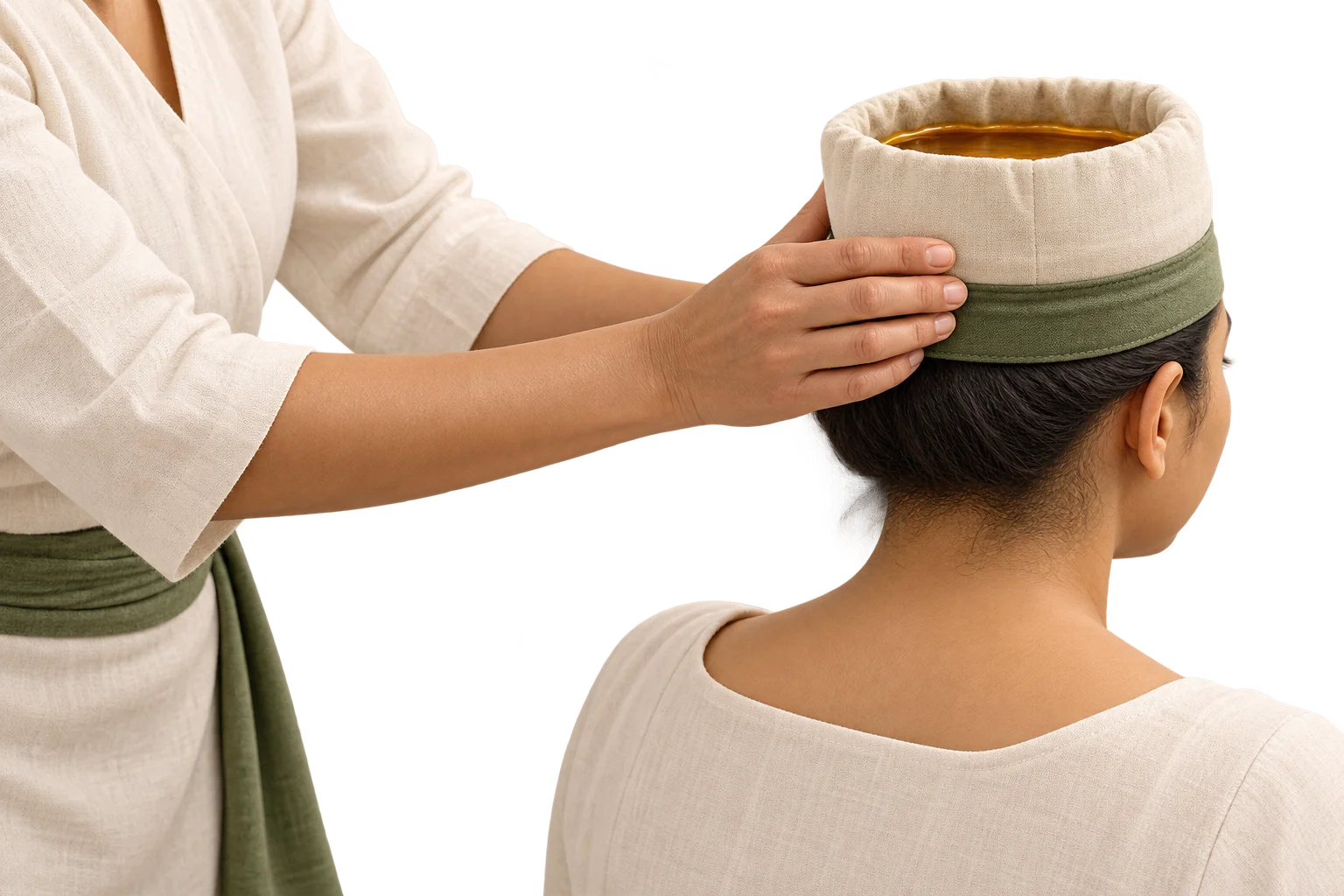
Shiro Pichu uses a cotton pad moistened with prescribed oil and placed on the head for a planned period. The main distinction is sustained local contact, rather than continuous massage or a flowing stream.
A physician may select Pichu when this form of head oil application fits the Ayurvedic assessment. It is one of several possible components of care; it is not selected simply because a patient has a neurological, eye or ear diagnosis. Tell us about scalp sensitivity and any difficulty remaining comfortably in one position.
The indicative treatment time is 20–30 minutes. A prescribed course may include 7 or 14 treatment days, with the schedule and need for further sessions discussed individually. Allow additional time for preparation and advice.
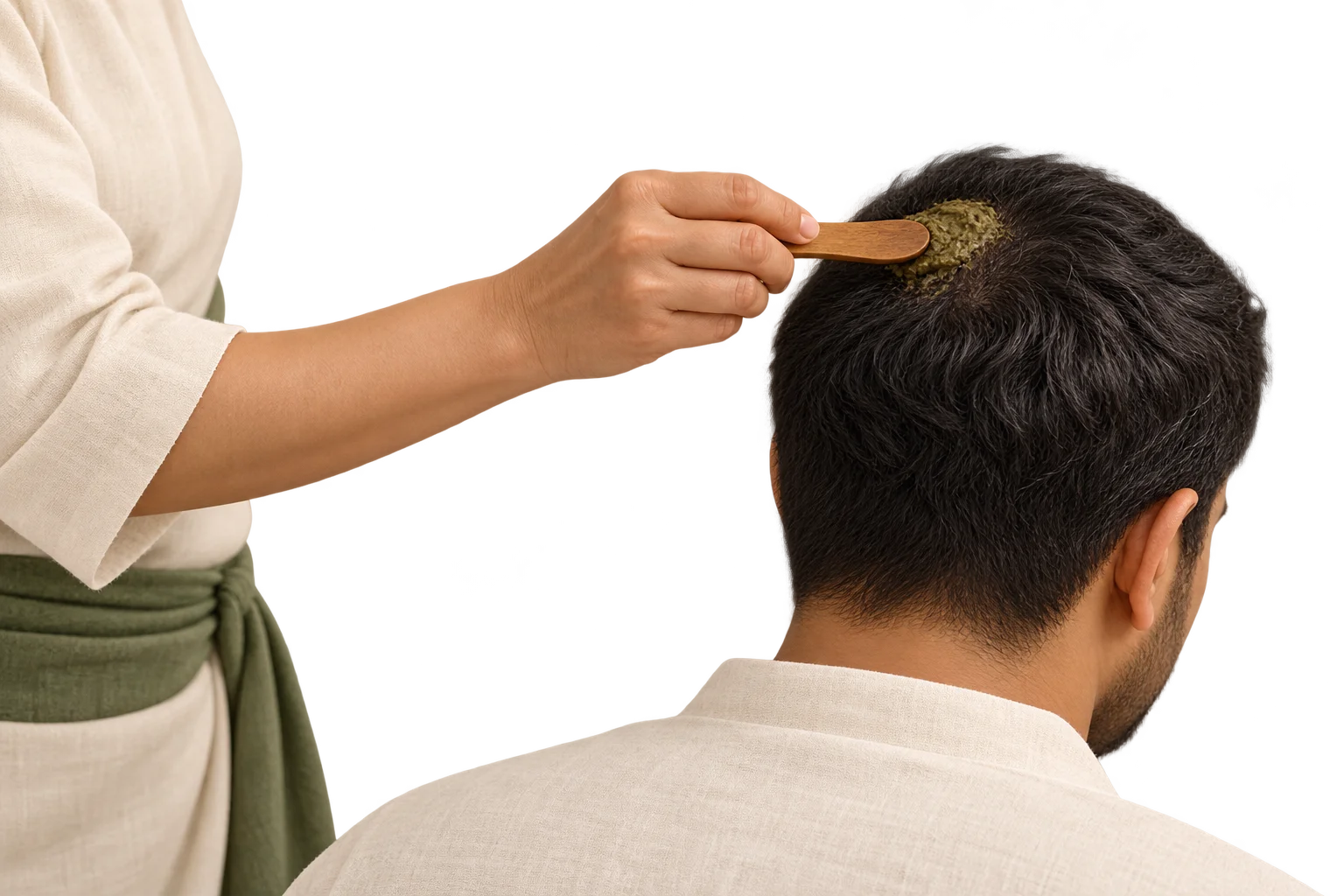
Local Shiro Lepa / Thalam — a focused scalp paste
Thalam applies a selected medicated paste to a localized area of the scalp. The preparation remains in place for a planned period. Its smaller area of application distinguishes it from full-scalp Thalapothichil.
At Ashtaang, the physician chooses the paste and its place in your treatment plan. The consultation is also the opportunity to discuss sleep, stress or other symptoms that brought you to the clinic. A paste application does not replace assessment of their cause.
An indicative application lasts 30–35 minutes. Depending on the prescription, the course may be a single treatment or extend over 3, 7 or 14 treatment days. Ask about the total visit time and how the paste will be removed before you plan the rest of your day.
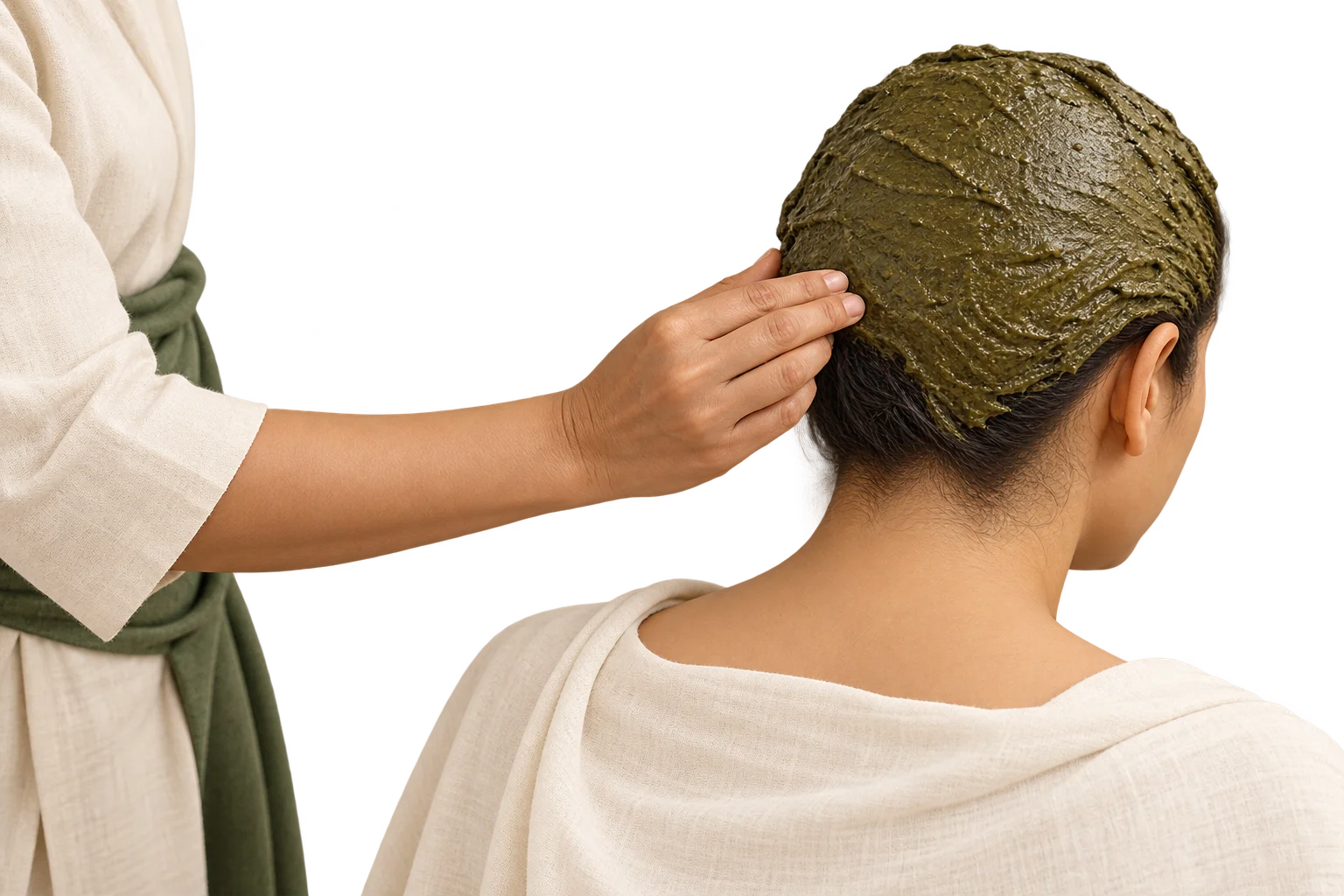
Thalapothichil — full-scalp herbal paste application
Thalapothichil, also called full Shirolepana, applies a selected medicated paste over the scalp more broadly than local Thalam. The physician determines the preparation, coverage and contact time.
This is a distinct treatment choice within Ashtaang’s Kerala Ayurveda practice, rather than a larger version that is automatically better. We explain why it has been selected for you and how it fits with any other prescribed care. Hair and scalp condition, sensitivity to ingredients and comfort during application all matter.
The indicative application time is 35–45 minutes, with course patterns of 7, 14 or 21 treatment days where prescribed. Your appointment schedule is individualized. Before leaving, clarify how and when to wash your hair and whether there are any instructions for that day.
Shirovasti / Shirobasti — retained oil around the scalp
Shirovasti retains prescribed oil around the scalp within a fitted sleeve. This creates a contained area of oil contact, unlike the cotton pad used in Shiro Pichu or the flowing stream used in Shirodhara.
The physician assesses whether retained oil is appropriate and specifies the material and treatment plan. Comfort with the fitted sleeve and the position required is part of that discussion. Tell the team promptly if you notice excessive warmth, pressure, leakage near the face or irritation.
Your session length and course are confirmed with your prescription. Several visits may be recommended, but there is no single schedule suitable for everyone. Shirovasti is a head treatment; it is different from the Panchakarma Basti procedures described in our separate guide.
Where Shirodhara fits
Shirodhara uses a controlled stream over the forehead. Our separate Shirodhara guide explains Taila Dhara and Takra Dhara, their practical differences and what to expect. Research or experience with one head therapy should not be assumed to establish the same effects for another.
Before your appointment
Bring your current medicine list and any relevant reports, and tell the physician about your main symptoms and their course. Mention scalp wounds or infection, allergies or reactions to oils and herbal products, recent head or neck injury or surgery, reduced sensation, pregnancy or breastfeeding, and difficulty sitting or lying comfortably. Recurrent sinus symptoms or a history of feeling worse after head oiling also deserve discussion.
Before the treatment day, confirm whether any special hair preparation is needed and how much time to allow. We will explain the prescribed procedure, its purpose and the advice that applies to you. These are clinic treatments, not instructions for making pastes, fitting an oil sleeve or arranging a course yourself.
Comfort, safety and aftercare
Good treatment includes attention to your comfort throughout. Speak up if an application feels too hot, stings, itches or causes dizziness or a worsening headache. Oils and herbal pastes can irritate sensitive skin, and materials and contact time need to be selected with care.
Before you leave, make sure you understand the removal and hair-washing instructions, any activity advice and when to return. Contact the clinic if irritation or other unexpected symptoms persist. Continue your existing treatment plan unless a clinician has reviewed and advised a change.
A sudden, extremely severe headache, or headache with new weakness, difficulty speaking, loss of vision, a seizure, or high fever and a stiff neck needs urgent medical assessment. Do not wait for a head-therapy appointment. Ashtaang does not provide emergency care.
Traditional use and current research
Ayurvedic guidance describes head oil therapies within specific clinical assessments. For example, the Ministry of AYUSH’s 2017 treatment guidelines discuss these methods in an institutional Avabahuka care pathway, including selected sleep and stress presentations. That context supports individual selection; it does not mean every person with poor sleep needs the same procedure. [1]
Contemporary reports sometimes study head therapies alongside medicines, yoga and several other treatments. One published case included Shirobasti and Shiro Pichu within a much wider regimen; it cannot tell us what either procedure achieved on its own. [2] The research considered for this guide does not establish dependable treatment effects for all five methods or all the concerns for which they are traditionally used.
At consultation, we discuss the intended role of your treatment and review your response. Traditional rationale, a person’s experience of treatment and research evidence each inform that conversation, but they are not interchangeable.
Questions patients often ask
Are Thalam and Thalapothichil the same?
Both use selected pastes, but local Thalam covers a focused area while Thalapothichil is a broader scalp application. The physician chooses the method and preparation.
Is Shiro Pichu a shorter Shirodhara?
No. Pichu uses a retained oil pad; Shirodhara uses a stream. They differ in method, not just duration.
Can I choose a therapy from the duration alone?
The time range helps you plan, but selection depends on assessment. A longer application or longer course is not automatically more suitable.
Do I need to stay at the clinic?
Treatments are outpatient. There is no overnight accommodation. If several treatment days are prescribed, reception can help arrange the visits.
Will these treatments regrow hair or cure a sleep disorder?
We do not promise those outcomes. Hair loss and persistent sleep problems need assessment, and a head therapy may be only one part of the care considered.
Can I have a treatment before work?
Ask about the full appointment length, oil or paste removal and any aftercare instructions when scheduling. The listed treatment times do not include every part of the visit.
Arrange a consultation
To discuss which approach may suit you, arrange a consultation at Dr. Pillai’s Ashtaang in Ambernath. Call or WhatsApp reception on +91 95521 28485 during working hours. Appointments are preferred; walk-ins depend on availability.
Further reading
References
- [1] Ministry of AYUSH. Ayurvedic Standard Treatment Guidelines. First edition, October 2017. Avabahuka, printed p.180, table 27.3, item 8. Professional-council-hosted copy: Read source
- [2] Kulamarva K, Chikkanna U, Ramakrishna KK, Bhargav H, Velayutham SG, Varambally S. Integrative Approach Improves Fall Risk and Postural Stability in Spinocerebellar Ataxia-2 – A Case Report. International Journal of Yoga. 2022;15(2):168–172. DOI: 10.4103/ijoy.ijoy_49_22. Read source
- [3] NHS. Headaches. Last reviewed 17 April 2024. Used only for urgent headache warning signs, not Ayurvedic rationale or indications. Read source