Dr. Pillai’s Ashtaang · Patient information
Kerala body therapies: Dhanyamla, Ksheera Dhara and Avagaha
Dhanyamla Dhara, Ksheera Dhara and Avagaha use selected liquids externally, but each has a different place in treatment. Dhanyamla Dhara involves pouring a fermented grain preparation; Ksheera Dhara uses medicated milk; Avagaha is an immersion treatment using a selected decoction. At Dr. Pillai’s Ashtaang in Ambernath, the physician chooses the procedure and materials after understanding your symptoms, health history and treatment needs.
These treatments are part of our Kerala Ayurveda practice. You do not need to choose a therapy before your consultation: the starting point is what you need help with and what is appropriate for your current condition.
Plan a consultationDhanyamla Dhara
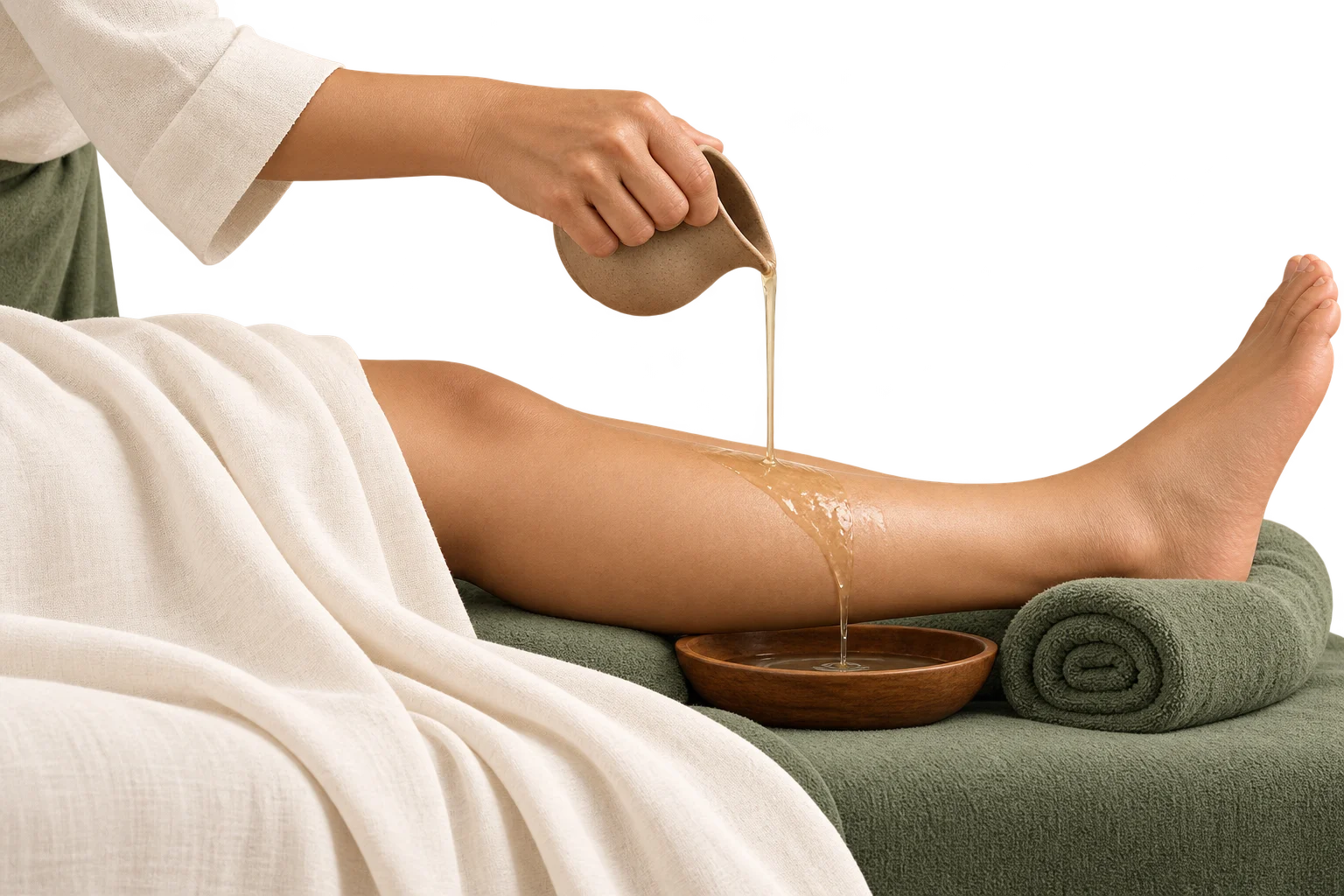
Dhanyamla is a fermented cereal preparation. In Dhanyamla Dhara, it is applied as a controlled stream over the body. This belongs to the Ayurvedic approach called parisheka, in which liquid is poured over a selected area or the body. It differs from an oil treatment in both the material used and the reason for choosing it. [S1, S2]
Within Ayurvedic practice, Dhanyamla Dhara may be considered in selected presentations involving joint stiffness, discomfort and heaviness. The Ministry of AYUSH’s Amavata guidance includes it within an inpatient treatment pathway. That reference helps explain its traditional clinical context; it does not mean every person with arthritis needs this therapy or that an inpatient regimen can be transferred unchanged to outpatient care. [S3]
At Ashtaang, an indicative session is 20–30 minutes. Treatment plans may involve 7, 14 or 21 treatment days, with the actual schedule determined by your physician. The preparation, area treated and sequence of other care are chosen for your case.
Ksheera Dhara
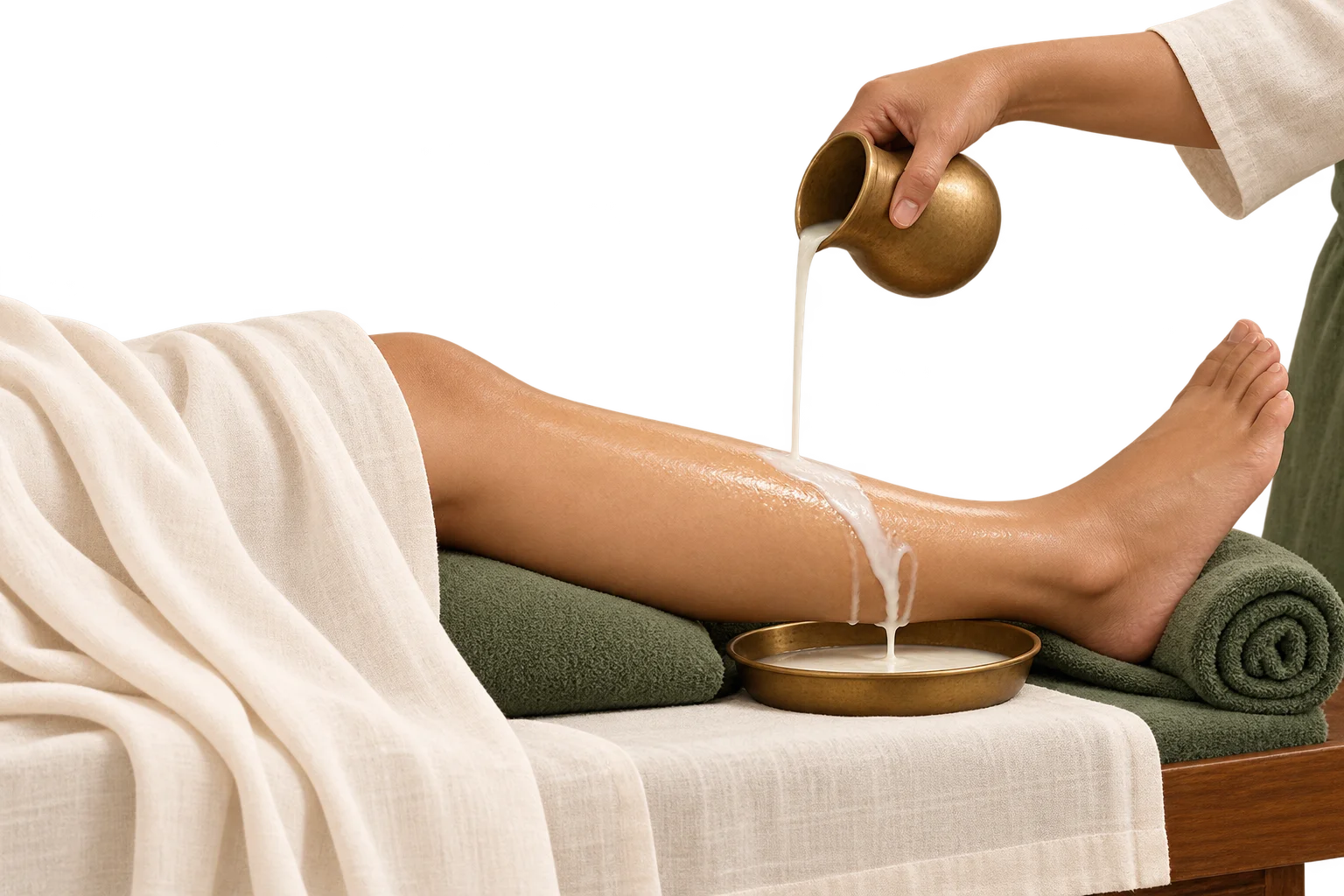
Ksheera Dhara uses medicated milk poured rhythmically over the body. Here, “ksheera” refers to milk and “dhara” to the stream. This page describes body treatment; it is distinct from a liquid stream directed over the forehead in Shirodhara.
The physician selects the milk preparation and controls how the treatment is applied. Choice of liquid matters in Ayurveda: milk, oil and fermented grain preparations are not interchangeable simply because all can be poured. Your symptoms, skin condition and ability to tolerate the treatment help guide that decision.
An indicative Ksheera Dhara session at Ashtaang lasts 40–45 minutes. Courses may involve 7, 14 or 21 treatment days, depending on the plan. Tell the physician about any milk allergy or previous reaction to an externally applied preparation before treatment is arranged.
The aim of treatment should be discussed in relation to your own symptoms and daily activities. Ksheera Dhara should not be understood as a promise to rebuild bone, reverse nerve damage or restore lost muscle tissue.
Avagaha
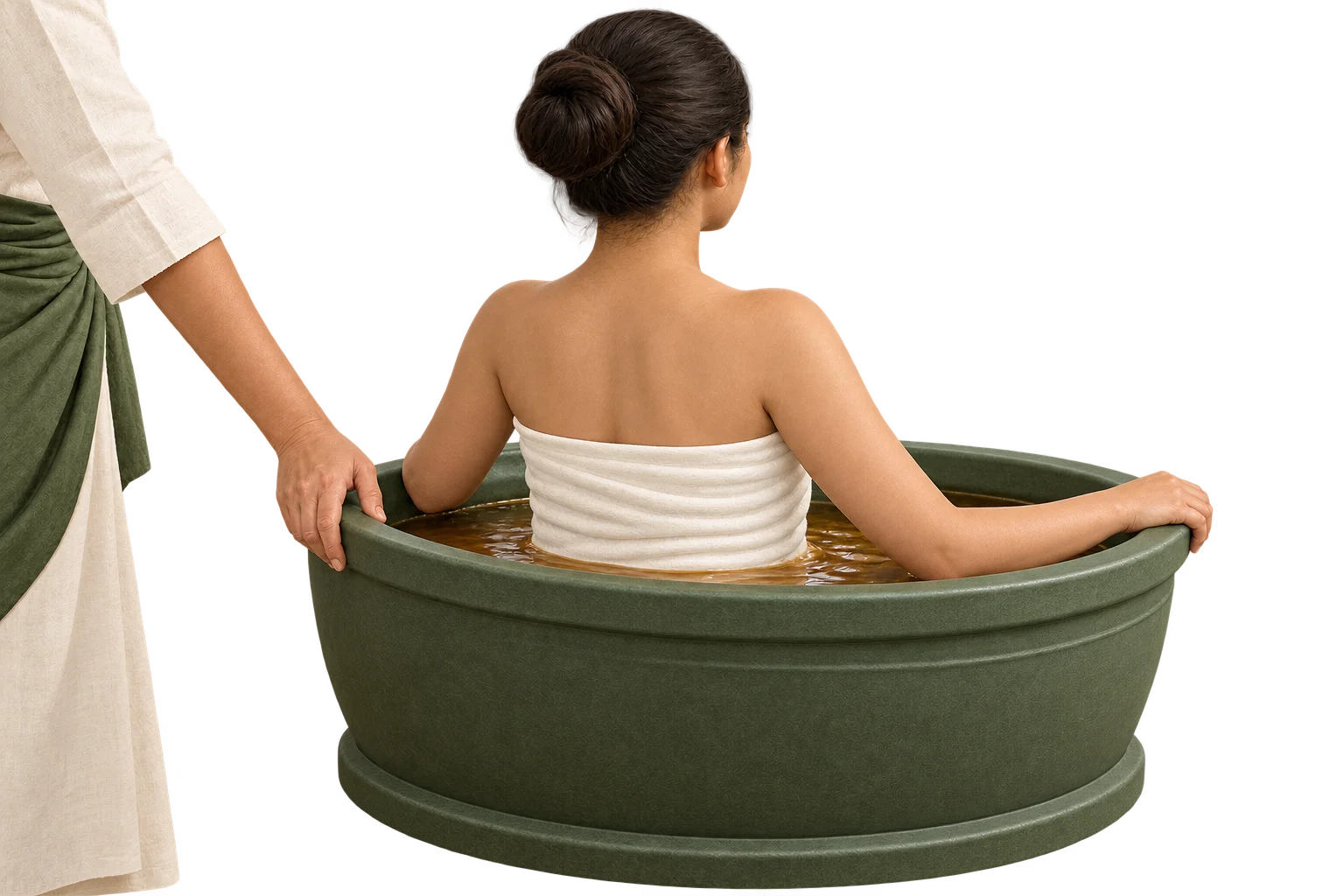
Avagaha is an external immersion treatment. At Ashtaang, it involves sitting in a selected, comfortably warm medicated decoction. The usual sequence includes oil application over the abdomen and back before the immersion phase.
Ayurvedic guidance includes Avagaha among local treatments for Arsha, the Ayurvedic category associated with haemorrhoids. It is one part of a clinical plan, rather than a diagnosis or a complete treatment on its own. [S3]
If you have pain, bleeding or discomfort around the anal or pelvic region, begin with a consultation rather than assuming that a bath is the appropriate solution. Examination may be needed to establish the cause. Your physician can then explain whether Avagaha has a useful role and whether another assessment or treatment is required.
The immersion phase is usually about 10–15 minutes; preliminary oil application may add about 5–10 minutes. A course may involve 5–7 treatment days. Allow additional time for changing and any consultation, and confirm the full visit length when arranging your appointment.
Please tell us beforehand if sitting down, getting up or maintaining the position is difficult. You can also discuss privacy and assistance needs before the visit.
How the treatment is chosen
A familiar symptom such as stiffness does not by itself identify the right procedure. Classical swedana guidance distinguishes different methods and degrees of warmth according to the person and condition. Your physician also considers relevant reports, current medicines and whether external treatment fits the wider plan. [S4]
Some people need medicines, diet and lifestyle advice without a procedure. Others may have a selected external treatment alongside that care. If oil-stream treatment is being considered, our Pizhichil guide explains it separately; warm bolus treatments are covered in the Pinda Sweda guide.
Planning your visits
The timings above describe indicative treatment phases, not guaranteed appointment lengths. A course may require several visits; its frequency, review points and any changes will be agreed for your case. Ashtaang provides outpatient care and does not offer overnight admission or accommodation.
Before your first treatment, bring relevant reports and a current medicine list. For follow-up, bring your previous prescription. Ask about meal timing, clothing and your plans for travel or work afterwards so that preparation suits the treatment selected for you. Do not start fasting or change your medicines solely to prepare for a therapy.
Comfort, safety and aftercare
Tell the physician about pregnancy, a recent operation, fever, open or irritated skin, reduced skin sensation, allergies or previous difficulty tolerating warmth. These details may affect whether a procedure is appropriate or how it should be adapted.
During treatment, let the team know promptly about burning, dizziness, breathing discomfort or increasing pain. There is no need to tolerate discomfort to make treatment work. Fever with severe anal or pelvic pain, or substantial bleeding, needs prompt medical assessment rather than waiting for a therapy appointment.
Afterwards, follow the advice given for bathing, activity and the next visit. Ask before adding home applications or repeating the procedure yourself. Contact the clinic if irritation or other unexpected symptoms persist; severe symptoms need urgent medical care.
Traditional use and research
Ayurvedic descriptions explain why a physician may select a procedure within a particular treatment plan. They do not, by themselves, establish how much benefit a particular patient will experience. Research also needs to distinguish the effects of a single procedure from those of medicines and other treatments given alongside it.
The appropriate goal is therefore specific to your case, with progress reviewed over time. A course length is not a guarantee of recovery, and the same evidence cannot automatically be applied to Dhanyamla Dhara, Ksheera Dhara and Avagaha.
Questions patients ask
Is Dhanyamla Dhara the same as Pizhichil?
No. Dhanyamla Dhara uses a fermented grain preparation; Pizhichil uses medicated oil. Your physician chooses according to the treatment plan.
Does Ksheera Dhara mean milk poured on the forehead?
The treatment described here uses medicated milk over the body. Forehead-stream treatment belongs to the Shirodhara discussion; confirm the area and method when the doctor explains your plan.
Can I book a course directly?
Start with a consultation. The physician needs to assess suitability and explain the purpose and schedule before arranging treatment.
Does Avagaha replace assessment for piles or pelvic symptoms?
No. It may have a role within a treatment plan, but the cause of symptoms must first be assessed. Bleeding or pain should not be self-diagnosed from a website description.
Will I need to stay at the clinic?
These are outpatient arrangements. Several visits may be needed, but overnight admission and accommodation are not provided.
Arrange a consultation
Discuss your symptoms and the treatment options with our physicians at Dr. Pillai’s Ashtaang, Ambernath. Call or WhatsApp reception on +91 95521 28485 during working hours. Appointments are preferred; walk-ins depend on availability.
Further reading
References
- [S1] FSSAI Ayurveda Aahara Compendium, hosted by CCRAS: Read source
- [S2] Charak Samhita New Edition, “Swedana”: Read source
- [S3] Ministry of AYUSH, Ayurvedic Standard Treatment Guidelines, first edition October 2017, coordinated by Rashtriya Ayurveda Vidyapeeth; official professional-council-hosted copy: Read source
- [S4] Charak Samhita New Edition, Swedadhyaya, Sutrasthana 14: Read source